
Golf Ball Fitting: The Missing Piece in Most Golfers' Equipment Strategy
Golf Ball Fitting: The Missing Piece in Most Golfers' Equipment Strategy
Brad Syslo has fitted thousands of golfers over his career - at TaylorMade Performance Labs, at Wilson Golf, and now as Lead Professor at Club Champion University. In all those fittings, one pattern repeats itself constantly: golfers invest deeply in fitt
By: Brad Syslo, Master Fitter & Lead Professor, Club Champion University
I have spent my entire career in golf equipment - from fitting Tour players at TaylorMade Performance Labs to training the next generation of Club Champion Master Fitters as Lead Professor at CCU. In that span, technology has changed dramatically. Launch monitors have transformed fitting from an art into a science. The data we can collect today would have seemed like science fiction twenty years ago.
One thing has not changed: most golfers still grab a golf ball off the shelf because of the brand name, the price point, or because their playing partner recommended it. They invest hundreds - sometimes thousands - in custom-fitted clubs optimized for their exact swing, and then load those fitted clubs with a ball that was never matched to that swing or that equipment combination.
That is a problem I can demonstrate at the TrackMan in about ten minutes. The golf ball you play affects your ball speed, launch angle, spin rate, trajectory, carry distance, and short-game stopping power. It interacts with your swing speed, attack angle, and the shaft profile we fit you into. Getting it wrong costs distance off the tee. It costs stopping power on approach shots. It costs control around the greens. And it costs confidence on every shot where you need the ball to behave predictably.
Ball fitting is not a luxury. It is the final piece of a complete equipment strategy - and at Club Champion, we treat it with the same data-driven rigor we apply to every other fitting we do.
The most common myths about golf ball selection
THE MYTH: "The Pro V1 is the best ball. Tour players use it, so it's the best for me."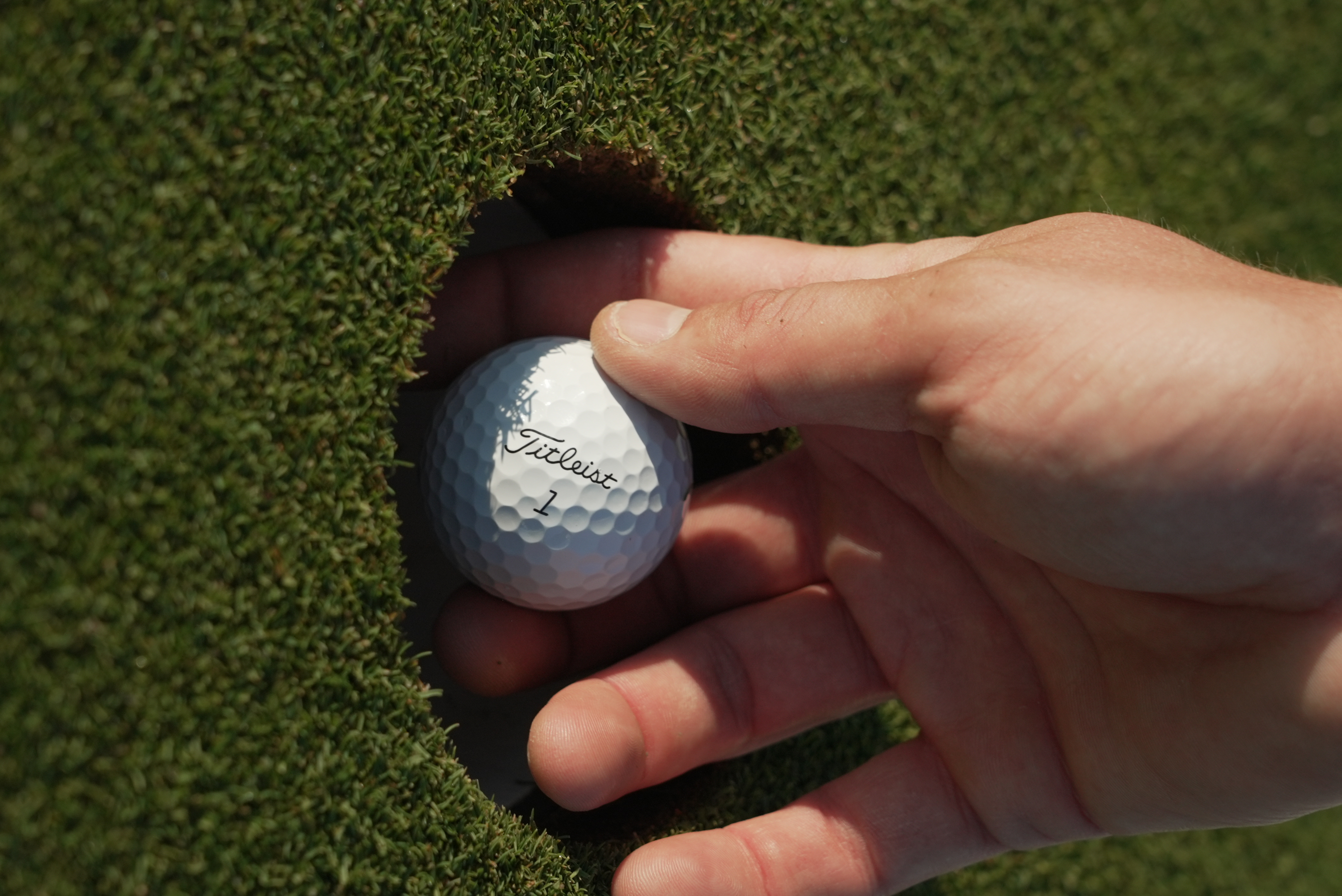
Tour players play balls fitted to their exact swing speeds - typically 115+ mph with the driver. The Pro V1 and its equivalents are high-compression balls engineered to perform optimally at those speeds. If your driver's swing speed is below 90 mph, a high-compression ball may not compress properly at impact, costing you distance and reducing spin on short shots. Titleist themselves have stated that fitting a golfer based solely on driver swing speed is a flawed approach - many factors beyond speed determine the right ball.
THE MYTH: "Soft balls are for slow swingers, hard balls are for fast swingers. I know which one I need."
Compression is one dimension of ball performance, and swing speed is only one factor within that dimension. Two balls with the same compression rating can produce very different spin rates, launch angles, and short-game behavior depending on their construction. The right ball optimizes total performance from driver through putter - not just the one that corresponds to your speed category on a chart.
THE MYTH: "All premium balls perform the same. I'll just buy what's on sale."
Premium balls can differ by more than 1,500 rpm in wedge spin between the highest and lowest spinning options in independent testing. At 35 yards from the green, the difference between a urethane-covered ball and a Surlyn-covered ball can mean the difference between stopping next to the hole and rolling through the green entirely. Ball construction produces measurably different outcomes on every shot type.
What a golf ball actually controls- shot by shot
The golf ball is the only piece of equipment that touches every single shot you hit. The driver gets used 14 times per round. The putter gets used 30 or more times. But the ball is present for all of it -and its properties affect every shot category differently.
Driver distance & spin: Ball compression and core construction determine energy transfer at impact. Wrong compression underperforms your swing speed. Too much spin costs carry; too little causes the ball to drop and run rather than fly. | Iron trajectory & carry: Ball spin with mid-irons determines whether approach shots fly high and stop soft or penetrate and release. Higher-spinning balls give more control on approaches - but only if your speed generates consistent spin. |
Short game stopping power: The biggest performance gap between premium and budget balls shows here. Urethane-covered balls spin 1,500+ rpm more on wedge shots than ionomer-covered balls - the difference between controlling proximity and watching the ball run past. | Feel and feedback: Ball feel affects every shot in a way impossible to ignore. A ball that feels wrong at impact introduces tension and affects timing. The right ball provides feedback that builds confidence and supports a natural swing. |
Putting roll: Compression and cover hardness affect how the ball comes off the putter face and rolls across the green. A ball that sounds and feels wrong on the putter disrupts the stroke and undermines your natural rhythm. | Temperature sensitivity: Ball compression changes with temperature. In cold conditions, high-compression balls lose their ability to deform properly, reducing energy transfer. Many golfers play the wrong ball for their season without knowing it. |
What the TrackMan data actually shows about ball differences
At Club Champion, our ball fittings are data-driven in exactly the same way our club fittings are. Here is what TrackMan consistently shows when we put golfers through a structured ball comparison:
Shot category | Low-spin ball (ionomer/2-piece) | High-spin ball (urethane/multi-piece) | Fitting implication |
Driver spin rate | ~2,200 rpm | ~2,600 rpm | Low-spin ball adds carry for higher-speed players; may cost distance below 90 mph |
7-iron spin rate | ~5,800 rpm | ~7,000 rpm | High-spin ball lands softer; low-spin ball releases - depends on approach style and course conditions |
Wedge spin (100 yds) | ~4,500–5,500 rpm | ~8,000–9,500 rpm | Largest performance gap - determines whether you control proximity or depend on luck |
35-yard chip spin | ~2,000 rpm | ~6,000+ rpm | Up to 4,000 rpm gap - the difference between checking and running for many shots |
Putt roll consistency | Lower frequency acoustics | Higher frequency acoustics | Feel preference plays major role - wrong ball creates tension in the stroke |
These are not marginal differences. A 4,000 rpm gap in short game spin between the ball you are currently playing and the ball you should be playing represents one of the largest single-variable improvements most golfers can make without changing their swing at all.
"There's no hands-on training experience like it in the golf industry. We've built a program from the ground up and put together some of the best fitting knowledge in golf into a single program - and that knowledge absolutely includes ball fitting. The ball is the constant in every fitting. It should be as carefully selected as the shaft." - Brad Syslo, Club Champion Lead Professor
Why ball fitting and club fitting belong together
Here is the insight that most golfers miss: your club fitting and your ball fitting are not independent decisions. They interact. When I fit a golfer into a driver shaft that produces a 10.5-degree launch and 2,400 rpm of spin at their swing speed, the ball they play determines whether that combination actually delivers optimal carry distance - or whether the ball adds 400 rpm and costs them yards they should be getting.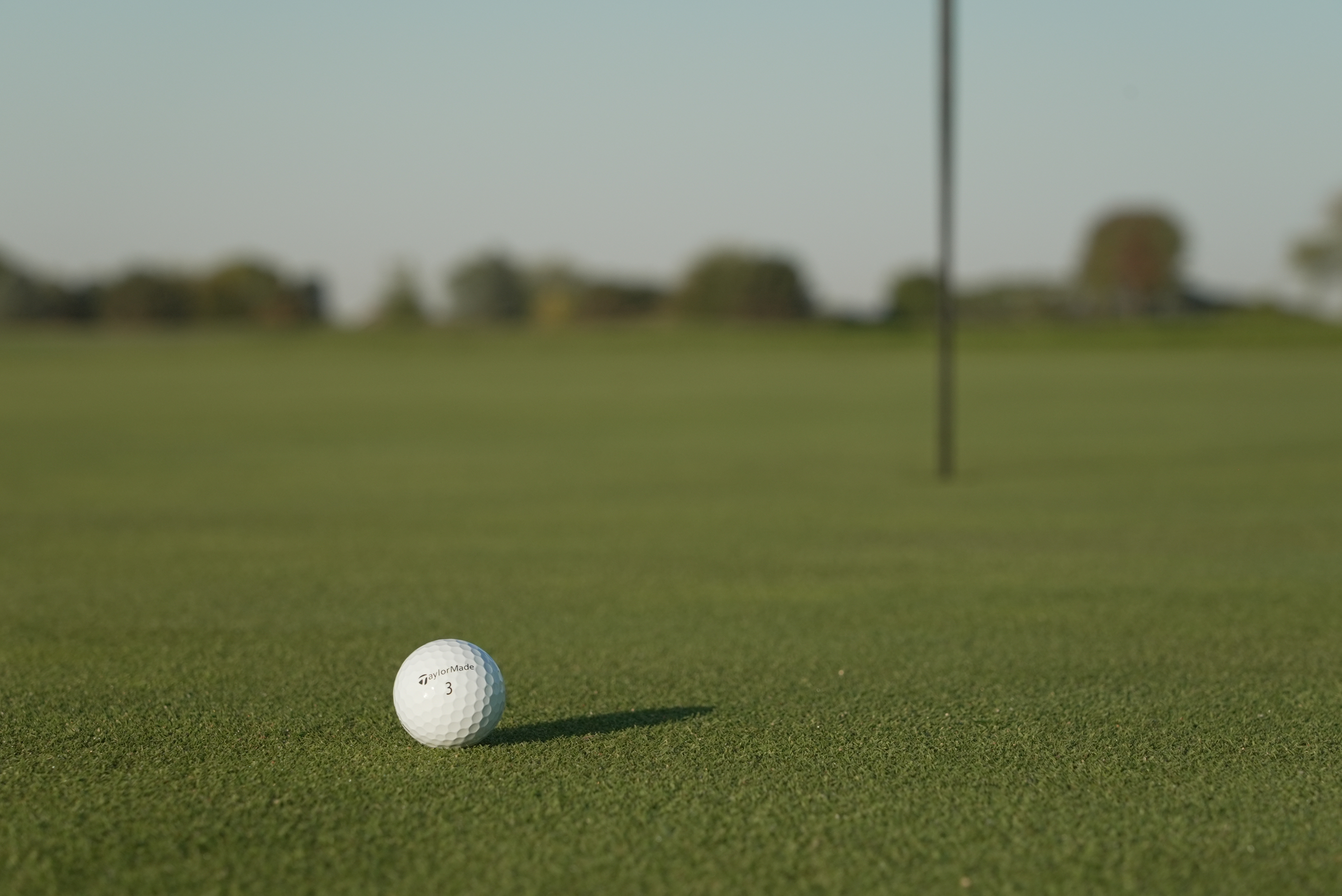
We know, from the club fitting, the golfer's exact ball speed, attack angle, and spin loft. That data tells us exactly what spin and launch the ball needs to contribute to, or subtract from, in order to land in the optimal window. A golf ball does not just accept whatever the club produces - it modifies it. The cover material, core construction, and dimple pattern interact with impact conditions to adjust the final spin and launch in ways that the club fitting data alone cannot predict.
This is why Club Champion offers ball fitting as a specific service, using the same TrackMan Pro technology in the same fitting bay where we do club fitting. The two fittings together produce a total equipment system - clubs and ball - that works as a coherent whole rather than a club fitting with a random ball thrown in.
The Scoring Zone Argument
The majority of strokes on a scorecard happen within 100 yards of the hole. Driving accuracy and iron distance matter - but proximity to the hole on approach shots, scrambling efficiency, and putts per round determine most of the difference between a 15-handicap and a 5-handicap. The ball contributes more to performance in this scoring zone than in any other part of the game. A properly fitted ball produces more short-game spin, better green-side feedback, and consistent putting roll - the variables that actually build lower scores over the course of a season.
How Club Champion's ball fitting works
A Club Champion ball fitting is a structured, data-driven process built around the same TrackMan Pro technology we use for every club fitting in the building and our AI Fitter Co-Pilot. It starts where it should start: with your data.
Your fitter begins by establishing a baseline with your current ball and your fitted clubs - capturing your actual ball speed, launch angle, spin rate, and carry distance across all relevant shot categories. That baseline is not a guess. It is your real performance numbers, which become the standard everything else is measured against.
From there, the data is processed through Club Champion’s proprietary AI Fitter Co-Pilot and integrated into our Ball Fitting software. The software was developed using millions of data points collected across virtually every golf ball and club combination on the market. The system also incorporates course conditions, weather variables, and player preferences, allowing the fitter and golfer to work together to identify the optimal golf ball for maximum performance and consistency.
The comparison is objective. The data makes the case. And the recommendation that comes out of it is grounded in your specific swing profile and scoring priorities in exactly the same way your shaft recommendation was. Not a ball that is popular. Not a ball a Tour player endorses. Not whatever is on sale. The ball that the data says performs best for your swing, your clubs, and your game.
1,500+ rpm wedge spin difference between highest and lowest spinning premium balls | 4,000+ rpm gap in 35-yard chip spin between urethane and ionomer-covered balls | Up to 12 yds potential carry gain on driver by correcting spin rate with the right ball | 100% of shots in a round touch the ball — the only equipment constant in golf |
Who needs a ball fitting
Every golfer who has been fitted for clubs should also be fitted for a ball. The club fitting identifies your optimal launch conditions and shaft profile. The ball fitting ensures the object you are launching with those fitted clubs is contributing to - not undermining - the results the fitting was designed to produce.
Ball fitting is especially important if you have recently changed swing speed significantly - through fitness training, aging, or technique change. The ball that performed optimally two years ago may no longer be the right match. It is also critical for golfers who have received club fittings without ball fittings, because the two are incomplete without each other.
At Club Champion, we treat the ball as what it is: the most played piece of equipment in your bag, the one variable that influences every shot, and the one fitting that most golfers have never completed. Fixing that is one of the most straightforward improvements in the game.
- Categories: Blog
- Tags: Fitting Experience Golf Ball Fitting