
Golf Club Fitting Near Me: What to Look For When Choosing a Fitter
Posted by
Posted on
Golf Club Fitting Near Me: What to Look For When Choosing a Fitter
Key Takeaways
- Proximity is only the first filter — once you have the local options, quality criteria must take over because a bad fitting is genuinely worse than no fitting at all.
- True brand agnosticism is the single most important quality in a fitter — a fitting affiliated with one manufacturer cannot show you the shaft from a different company that might add 15 yards.
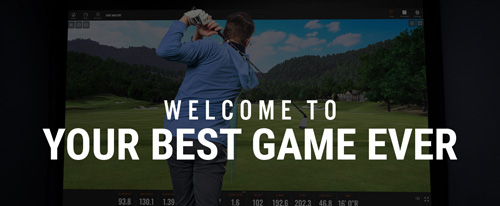
- Tour-grade launch monitor technology (TrackMan Pro, Foresight GC Quad, or FlightScope) is non-negotiable; a fitting without a launch monitor is a guess with props.
- The best fitters listen first — they ask about your goals, your typical miss, and your feel preferences before a single ball is hit.
- Club Champion operates all 160+ studios as company-owned locations under a consistent training curriculum, technology standard, and component inventory — not a franchise model.
In This Article
- Introduction
- Why "Near Me" Is Only the First Filter
- The 7 Things to Look For in a Golf Club Fitter
- Red Flags to Walk Away From
- How Different Fitting Environments Compare
- Questions to Ask Before You Book
- The Difference Between a Fitting and a Demo Session
- Does Location Matter for Fitting Quality?
- When Is the Right Time to Get Fitted?
- Frequently Asked Questions
Introduction
When I started fitting golfers in 1998 at EJL Custom Golf outside Chicago, the options were sparse and the technology was primitive. You stood on a mat, a fitter eyeballed your swing, and maybe swapped a shaft or two based on gut instinct. The first time I saw what a launch monitor could actually reveal about a golfer's swing — the attack angle, the face angle at impact, the spin rate — I knew the industry was about to change permanently.
I founded Club Champion in 2010 because I believed every golfer deserved access to a truly professional fitting experience: technology-driven, brand-agnostic, built on data rather than sales incentives. Fifteen years later, we operate in 160+ markets worldwide and have certified hundreds of Master Fitters through Club Champion University.
But here is the thing I want to be honest about: there are a lot of options when you search "golf club fitting near me." Some of them are excellent. Some of them will put you into the wrong clubs and send you home thinking the problem is your swing. This guide is designed to help you tell the difference — regardless of whether you ultimately book with Club Champion or not. Because a bad fitting is genuinely worse than no fitting at all.
"The best fitting I ever witnessed had nothing to do with equipment. It was a fitter who listened so carefully to a golfer's goals that he recommended an adjustment to her current clubs rather than a new purchase. That is what brand-agnostic, golfer-first fitting looks like."
— Nick Sherburne, Founder, Club Champion
Why "Near Me" Is Only the First Filter
Proximity matters — you want a fitting you can actually get to. But the moment you find the options near you, convenience has to give way to quality. The seven criteria below are what I would use to evaluate any fitter in any market. They are the same standards I built Club Champion around, and they are the same questions I would ask if I were a golfer walking in off the street.
The 7 Things to Look For in a Golf Club Fitter
1. True brand agnosticism — no manufacturer allegiance
The single most important quality in a fitter. If a fitting studio is affiliated with one manufacturer — a TaylorMade fitting day, a Titleist fitting center — their fitter's job is to find the best option within that brand's lineup. That might work out. It also might mean you miss the shaft from a different company that would add 15 yards to your carry. A genuinely brand-agnostic fitter has access to components from every major OEM and premium aftermarket shaft brand, and no financial incentive to recommend one over another. Ask directly: "Do you receive any compensation or incentives from equipment manufacturers?" The answer tells you everything.
2. Tour-grade launch monitor technology — not a lie board and a prayer
A fitting without a launch monitor is not a fitting. It is a guess with props. TrackMan Pro, Foresight GC Quad, and FlightScope are the industry-standard systems for a reason — they capture every meaningful data point at impact: ball speed, launch angle, spin rate, attack angle, face angle, carry distance. Any fitter worth working with should be able to tell you exactly which technology they use, how they interpret the data, and why those metrics matter for your specific swing. If they cannot, walk out.
3. Deep component inventory — enough to actually find what works
A fitting with three driver heads and six shafts is not a fitting. It is a demo session with a better name. The value of a fitting is in the breadth of testing — finding the exact combination from a genuinely large inventory that produces the best data for your swing. At Club Champion, we offer 65,000+ hittable clubhead and shaft combinations. Even smaller independent fitters should have substantial multi-brand shaft inventories. Ask how many shafts they carry and how many head options they have across brands. If the answer is "a few dozen," keep looking.
4. Certified, trained fitters — not retail staff with a side interest in fitting
Fitting is a skill that takes years to develop. There is a meaningful difference between a golf retail employee who has taken a manufacturer's online course and a certified Master Fitter who has completed hundreds of hours of hands-on fitting training. Ask about your fitter's credentials: How long have they been fitting? What certification programs have they completed? How many fittings do they perform in a week? The last question is important — a fitter who does three fittings a week has fundamentally different pattern recognition than one who does three a day.
5. An in-house build shop — fitted clubs built to spec, not outsourced
The fitting is only half the process. The clubs have to be built to the exact specifications determined during the fitting — the right shaft, installed at the right frequency, with the correct swing weight and grip size. If a fitter recommends specs and then sends your order to a manufacturer's build queue, tolerances can drift. Look for fitters with their own master builders on-site who assemble and verify every club before it leaves. This is non-negotiable for tour players, and it should matter to you too.
6. A fitter who asks more than they tell
The best fitters I have trained at Club Champion University all share one habit: they listen first. Before a single ball is hit, they want to know your goals, your typical miss, your current equipment, your feel preferences, and what courses you typically play. A fitter who jumps straight to equipment without understanding the golfer is selling, not fitting. If your fitter does not ask what you are trying to accomplish before putting a club in your hands, that is a problem.
7. Verified reviews and a track record of results
Look for fitters with substantial, recent, verified reviews that speak specifically to improvement — distance gains, accuracy improvements, lower scores. Generic five-star reviews tell you about customer service. Reviews that say "I gained 18 yards and stopped slicing" tell you about fitting quality. Both matter, but the latter tells you whether the fitting actually worked.
Red Flags to Walk Away From
| Red Flag | What It Means |
|---|---|
| Recommends clubs before hitting a single ball | They are selling inventory, not fitting your swing. |
| No launch monitor data | Ball flight and feel alone cannot reveal what happens at impact. |
| Single-brand fitting labeled as custom | Real fitting requires multi-brand access. |
| Rushed appointment under 45 minutes | Proper shaft fitting alone takes 30 to 45 minutes per club. |
| No fitting report or build sheet provided | You should leave with documented specs you own. |
How Different Fitting Environments Compare
| Factor | Club Champion |
|---|---|
| Brand agnostic | Yes — all major OEMs and premium aftermarket shaft brands |
| Tour-grade launch monitor | TrackMan Pro at every location |
| 65,000+ component options | Yes — every location |
| Master-certified fitters | Always |
| In-house build shop | Yes — every location |
| Fitting report included | Always |
| AI-assisted fitting technology | A.I. Fitter Co-Pilot |
Questions to Ask Before You Book
I recommend every golfer ask these questions before committing to a fitting appointment — with any fitter, including us:
- What launch monitor technology do you use, and how do you use the data to make fitting decisions?
- Are you affiliated with or incentivized by any equipment manufacturer?
- How many shaft options do you have across brands, and can I see a list?
- What certifications does my fitter hold, and how many fittings do they perform per week?
- Do you build clubs in-house, and what quality controls are in place before clubs ship?
- Will I receive a fitting report with my exact specifications, regardless of whether I purchase?
- What is your policy if I am not happy with the results after receiving my fitted clubs?
"A fitter who cannot answer those questions clearly and confidently is not ready to fit you. The right fitter welcomes scrutiny — because they know the data will back them up."
— Nick Sherburne, Founder, Club Champion
The Difference Between a Fitting and a Demo Session
This distinction matters more than most golfers realize. A demo session puts you in a bay with three or four of a manufacturer's current driver models, lets you hit each one, and tells you which went farthest. It may even use a launch monitor. But the component inventory is fixed, the brand options are limited, and the "fitting" is really just a guided purchase decision within a predetermined set of options.
A real fitting starts from zero. It asks what swing you have, what ball flight you want, and what the data says is possible — and then it searches across a genuine range of components to find the combination that gets you there. The number of options matters because fitting is a search problem. The more components you can test, the higher the probability that the best possible combination for your swing actually gets found.
This is why inventory breadth is one of my top criteria, and why I built Club Champion around the principle that every major brand had to be represented in every studio. Not because more is always better. Because the right answer for your swing might be sitting in a shaft brand or head design that a single-manufacturer fitting would never show you.
Does Location Matter for Fitting Quality?
Golfers sometimes assume that a fitting in a major metro market will be better than one in a smaller city. That is not necessarily true — and it is a good reason to choose a fitting company that enforces consistent national standards rather than relying on individual location quality.
At Club Champion, every location operates under the same training curriculum from Club Champion University, uses the same TrackMan Pro technology, carries the same component inventory, and follows the same fitting protocol. A golfer fitted in Charlotte gets the same experience as one fitted in Dallas or Seattle. That consistency is a product of corporate ownership — all 160+ of our studios are company-owned, not franchised — and it is something worth asking any fitting company about before you book.
When Is the Right Time to Get Fitted?
The honest answer: sooner than you think, and more regularly than most golfers do. Custom fitting is not a one-time event. As your swing evolves, as your flexibility changes, as technology improves — the optimal equipment for you changes with it. I recommend a fitting review every two to three years at minimum, or any time you experience a significant change in your game, your body, or your equipment needs.
The best time to book your first fitting is before you buy new clubs, not after. A fitting determines what you should buy. Buying first and fitting second means you are adjusting to equipment that may not have been right for you to begin with.
Find a Club Champion Studio Near You
160+ locations. Brand-agnostic. TrackMan Pro. Master-certified fitters. In-house build shops. Fitting reports included. Visit clubchampion.com/locations to find your nearest studio and book your fitting today.
Frequently Asked Questions
How do I know if a local fitter is truly brand-agnostic?
Ask directly: "Do you receive any compensation, co-op marketing funds, or sales incentives from any equipment manufacturer?" Also ask to see a list of the shaft brands they carry — a genuinely agnostic fitter will have inventory from multiple OEMs and premium aftermarket brands like Fujikura, Mitsubishi, Aldila, Project X, and others. If their shaft options are dominated by one brand's stock offerings, that is a meaningful limitation.
What is the difference between a Club Champion fitting and a fitting at a manufacturer's fitting event?
A manufacturer's fitting event — a TaylorMade day, a PING fitting, a Titleist fitting center — finds the best option within that brand's lineup. It may use tour-grade technology and experienced fitters. But it cannot show you a Fujikura shaft paired with a Callaway head, or a Mitsubishi shaft in a PING driver. Club Champion's fitting is brand-agnostic across 65,000+ components, which means the search for the best combination for your swing is genuinely unrestricted.
How often should I get re-fitted?
A fitting review every two to three years is a reasonable baseline for most golfers. More frequently if you experience a significant physical change — injury, weight change, increased fitness — or a meaningful swing change through instruction. Equipment technology also evolves; a fitting done five years ago may not reflect what is now possible for your swing. Your Club Champion fitting report is stored in your MyAccount profile, making it easy to build on prior sessions rather than starting from scratch.
- Categories: Blog
Related Articles
Discover how a data-driven putter fitting can match your equipment to your stroke, improve consistency and distance control, and help lower your scores.
Independent testing shows that 9 out of 10 golfers gain significant speed and distance with aftermarket shafts – and a professional shaft fitting is the only way to find the one that's truly built for your swing.
Two independent, double-blind TrackMan studies conducted a decade apart found that SST PURE shaft alignment added 7+ yards to iron distance and 3.72 yards of extra carry in drivers – and Club Champion includes it as a standard step in every single build.