
Why Club Champion
Every part of your bag can be built to your numbers.
Most clubs sold are the closest available match to a golfer, not a club built for one. That gap is small on paper and obvious on the course. This is what it takes to close it, decision by decision, and what it looks like when every part is chosen on measurement.
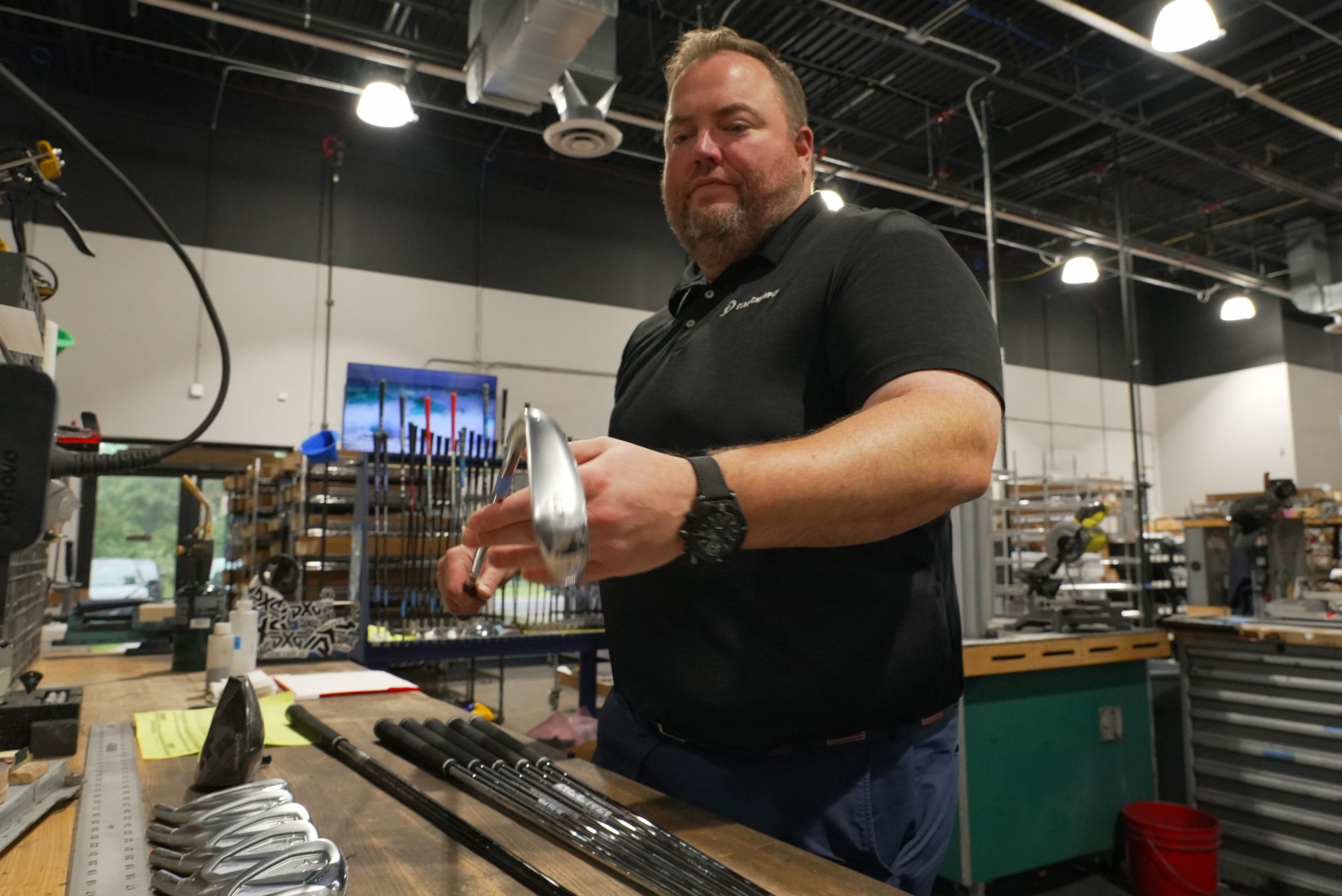
What it takes to fit a club with no compromises.
A fitting is only as good as the range of answers available to it. Three things have to be true before a fitter can honestly recommend the best club for you — not just the best one within reach.
Every brand on the table
Club Champion puts its money behind Master Fitters and measurement rather than a house brand, so nothing is ruled out before you walk in. Our fitters are paid the same whatever you buy, so the brand never decides the recommendation.
Chosen by your numbers
Every head and shaft on the mat earned its spot. Your numbers put it there. The session starts from what your swing asks for, then the parts are ordered and built to match.
Keeping your clubs is an option
Master Fitters recommend what the numbers support, and often that's a club you already own. It shows up in our own customer reviews often enough to be worth saying out loud.
A club is a set of separate decisions, not one purchase.
Head, shaft and grip are what anyone sells. The parts in between, the weights, ferrules and tapes, are what bring a club to life, and each is made by a different company. A fitter who can only mix within one catalog is answering a narrower question than the one your swing is asking.
Head
The head sets forgiveness, launch, and how the club sits behind the ball. It is chosen against your dispersion numbers, across every brand we carry, with no requirement that it match the shaft’s maker.
Weight
Head weight and swingweight change how the club loads and where it wants to sit through impact. Both are set deliberately during the build — not accepted as the club arrives.
Ferrule
The joint between head and shaft. It’s fitted and finished as part of the build, which is what keeps the assembly square and consistent over time.
Shaft
The shaft does more to change ball flight than most golfers expect, and it’s the one component big box demo stock almost never varies. Aftermarket shafts are tested as their own decision, not accepted as whatever shipped in the box.
Tape
Shaft tape sets grip diameter and adds to build weight. Small changes here alter feel and control more than most golfers realize, so it is measured and specified, never defaulted.
Grip
Size, texture and weight change how much the hands interfere with the release. It’s the cheapest component to get wrong and the easiest to correct once measured.
How the club is specified.
| Club Champion | Big box store | OEM fitter | |
|---|---|---|---|
| How the club is specified | Each component specified as its own decision | The closest stock configuration on the wall | That brand’s own build options only |
| What happens when nothing fits | The components change until the numbers do | You take the nearest available option | You are fit within the range that exists |
One variable at a time, so the result can be trusted.
Changing several things at once tells you the club improved without telling you why. The session isolates each decision against a baseline taken from your own clubs, which is only possible when every component can be swapped freely.
Your own clubs set the baseline
You hit what you walked in with first. Every number after that is measured against it, so improvement is a comparison rather than a claim.
Shaft is isolated first
The head is held constant while shafts vary by weight, flex, length and profile. The winning shaft is identified before anything else moves.
Head is tested on that shaft
With the shaft fixed, heads are swapped across brands. Any change in the numbers now belongs to the head, because nothing else changed.
Then the specs that finish it
Loft and lie are adjusted to your delivery, head and swingweight tested one change at a time, and the shaft's bend profile (kick point) confirmed against your numbers. Length and grip follow.
How the recommendation is reached.
| Club Champion | Big box store | OEM fitter | |
|---|---|---|---|
| How the recommendation is reached | One variable isolated at a time against your own baseline | The closest match from demo stock on hand | Fit within a single catalog |
The spec you hit is the spec that gets built.
A fitting produces a set of numbers. Whether those numbers survive the trip to a build bench is a separate question, and it is where most of the difference between fitters actually sits.
Assembled in our own facility
Built here, not ordered elsewhere
Most fitters record your specs and send them to the manufacturer to assemble. Every handoff is a chance for a tolerance to drift. Clubs are assembled by hand in our own build shop, by builders who do nothing but build, full-time.
Checked before it ships
Calibrated against the bay you sat in
The loft, lie and swingweight machines in the studio are calibrated to the machines in the build shop. Your club is measured on the same standard it was fitted on, before it ships, so what arrives repeats what you saw on the screen.
What any of this changes for you.
Three things a golfer can check afterward, each one a direct result of how the session is set up rather than a claim about it.
You are told when to keep what you have
The recommendation follows the measurement, so keeping a club is an available answer. Ask the fitter directly what should stay in your current bag.
You leave with the numbers, not a summary
The session produces a build sheet listing what was tested and what performed, alongside an itemized recommendation. It can be checked later rather than taken on trust.
It stays right after you buy it
Specs move over time and so do swings. Adjustments and re-fits are part of the arrangement, and the guarantee sets what happens if the build does not repeat.
Questions about the difference.
How a Club Champion fitting compares with the alternatives.
Is Club Champion brand agnostic?
Yes — every recommendation is driven by your fitting results, not by allegiance to any single manufacturer, so the components you’re shown are whatever the data proves fits your swing best.
What is the difference between Club Champion and a manufacturer fitting?
A manufacturer fitting is limited to that brand’s equipment, while Club Champion is brand agnostic and can compare components across multiple manufacturers. A manufacturer fitting can be useful when you already know the brand you want; a brand-agnostic fitting is designed to compare options without starting from a single-brand assumption.
What is the difference between Club Champion and a traditional golf retail fitting?
The main differences are fitting depth, brand choice, component testing, build specifications, and how the finished clubs are produced. Club Champion uses a brand-agnostic fitting matrix and builds ordered clubs to the specifications identified in the session; traditional retail fitting processes vary by retailer and location.
See it for yourself.
The argument only goes so far in writing. The rest happens in a bay with your own clubs on the mat.
Book a fitting
Pick the fitting that matches what you want to improve, then see exactly what a session covers before you commit to one.
Read the rest of the case
The guarantee, the build process, the fitters, and what golfers measured afterward, each covered in full on its own page.